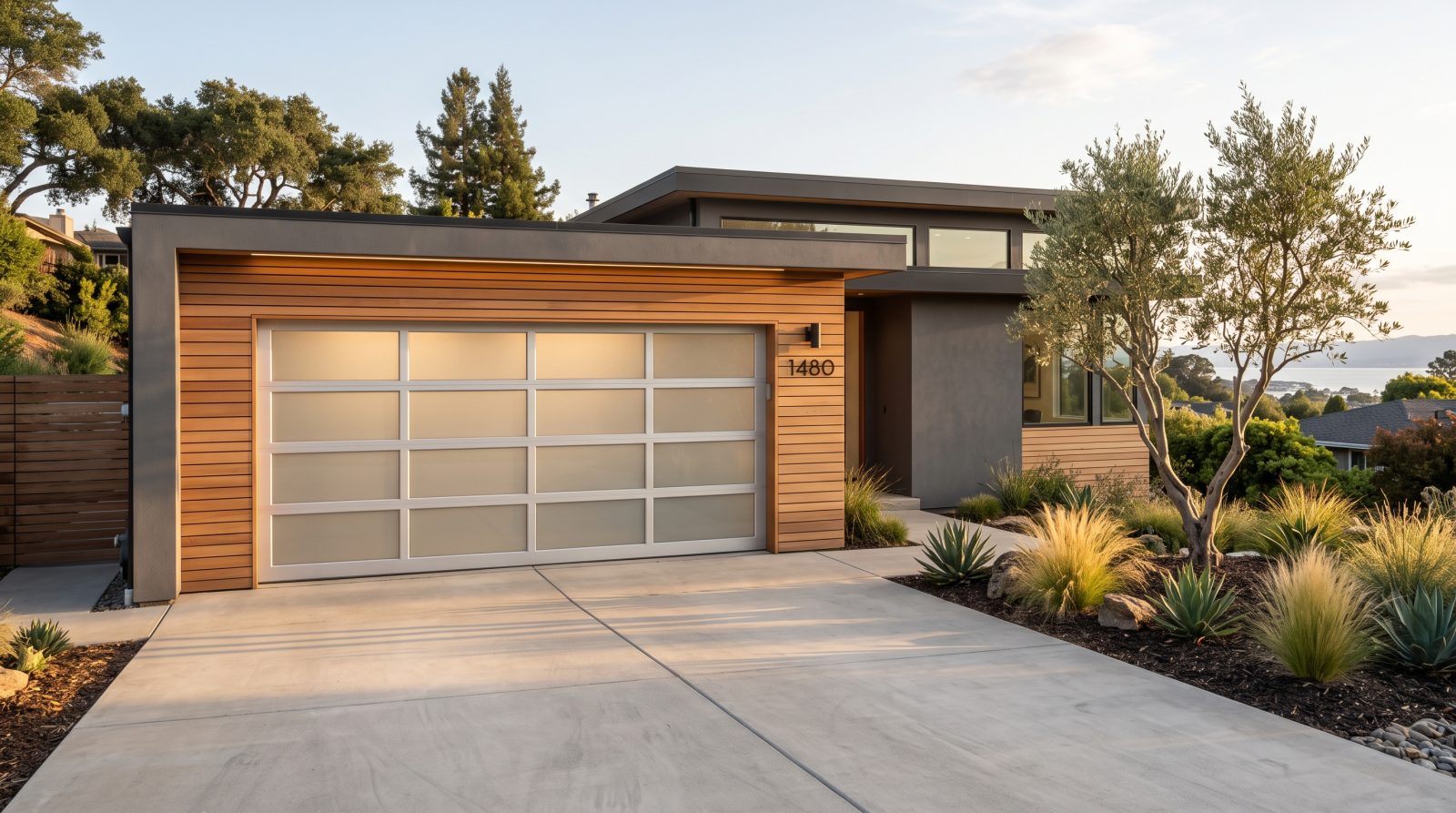
What an aluminum and glass garage door actually is
At its core, this door type is an aluminum frame holding rectangular glass (or solid) panels, built in the same sectional, roll-up format as a traditional steel door. It tilts up on tracks and runs on the same opener you would use for any other sectional door. The aesthetic difference is enormous, but the mechanics are familiar, which is part of why these doors integrate so easily into existing Bay Area garages.
The frame is extruded aluminum, prized because it is light and naturally corrosion-resistant, which matters a great deal near the water. The 'glazing' is the material set inside each frame opening, and this is where most of the design decisions live. You are not locked into clear glass; the same frame can hold frosted, tinted, laminated, insulated, or even solid aluminum panels, and many homeowners mix them, going solid on lower rows for privacy and glass up top for light.
Because the frame is lighter than steel but the glass adds weight back, the finished door often lands in a moderate weight class. That balance is exactly why proper spring sizing and track alignment are not optional details on this door type, they are what determine whether the door floats open smoothly or fights you every cycle.
- Aluminum frame: light, rust-resistant, available in many powder-coat and anodized finishes
- Glazing options: clear, frosted/obscure, tinted, laminated, tempered, insulated (dual-pane), or solid panels
- Same sectional roll-up operation and opener compatibility as a standard door
- Highly customizable: panel layout, glass type, and finish can usually be specified row by row
Glass options that matter in the Bay Area's microclimates
The single most important choice is glazing, and the right answer depends heavily on which way your garage faces and where in the Bay you live. The region is famous for having a dozen climates at once: a fog-cooled garage in the Sunset or Pacifica has very different needs than a sun-blasted one in Walnut Creek, Livermore, or San Jose's warmer pockets. Clear glass is the most dramatic look and the most light, but on a hot, west or south-facing wall it can turn a garage into an oven and wash out anything stored inside.
Tinted and low-E coated glass cut solar heat gain and glare, which is the practical pick for inland and sun-exposed elevations. Insulated dual-pane glazing adds a thermal buffer and is worth strong consideration if the garage is conditioned, converted to a gym or office, or shares a wall with living space, something increasingly common as homeowners reclaim garage square footage. For privacy without losing brightness, frosted or obscure glass is the workhorse: it glows with daylight while hiding the contents and the cars from the street.
Safety glass is a real consideration too. Laminated and tempered glass resist breaking and, if they do break, fail safely rather than in dangerous shards, which is reassuring on a street-facing door where kids and balls and delivery traffic all converge. The honest tradeoff across all of this is cost versus performance: clear single-pane is cheapest and least insulating, while insulated low-E laminated glass costs more but pays you back in comfort and durability.
- Clear: maximum light and the boldest modern look; best for shaded or fog-cooled, north-facing garages
- Tinted / low-E: reduces heat and glare; the sensible choice for sunny inland and west/south elevations
- Frosted / obscure: daylight without exposing the contents; a popular privacy option
- Insulated dual-pane: thermal buffer for conditioned or converted garages near living space
- Laminated / tempered: stronger and safer break behavior for street-facing doors
Frame finishes, salt air, and why it matters near the coast
Aluminum is naturally corrosion-resistant, but the finish on the frame still does real work, especially in the Bay Area's marine environments. Homes in San Francisco, the immediate coast, and around the bay's edges live in salt-laden air that is hard on metal and on cheap finishes in particular. A quality powder-coat or anodized finish is what stands between a crisp matte-black frame and a chalky, faded one a few seasons later.
Anodized finishes (clear, bronze, dark) integrate the color into the metal's surface and hold up exceptionally well to UV and salt. Powder coating offers a far wider palette, popular Bay Area choices run from matte black and bronze to off-white and warm wood-grain looks that mimic cedar without the maintenance. Either can perform well; the key is specifying a finish rated for exterior and, ideally, coastal exposure rather than a builder-grade default.
Frame color is also where these doors earn their architectural reputation. A dark frame reads sharp and contemporary against light stucco; a wood-grain finish softens the modern look to suit a Craftsman or mid-century home; a matching off-white frame can make the glass nearly disappear. Because we come to you, we can look at your actual elevation, siding, and trim in real daylight before you commit to a finish, which beats guessing from a swatch under store lighting.
What these doors typically cost (industry ranges, not a quote)
Pricing for aluminum and glass doors varies more than almost any other door type because nearly everything is configurable. The figures below are typical industry ranges meant for planning only; your actual price depends on your region, door size, glass type, frame finish, insulation, and the scope of any track, spring, or opener work involved. A full-view glass door is generally a premium product compared with a basic steel one, and the glass spec is the biggest single swing in cost.
As a rule of thumb, a standard single-car full-view aluminum door with basic clear or obscure glass commonly falls in the lower part of the range below, while a double-car door with insulated, tinted, or laminated glass and a coastal-grade frame finish sits toward the top. Add the labor for removing the old door, reinforcing or replacing tracks, and resizing springs to match the new door's weight, and you have the realistic installed total.
One honest point worth keeping in mind: the glass and finish choices that make these doors great are exactly the ones that move the price. We will walk you through where your budget is best spent, often that is insulated glass on a conditioned garage, or a coastal finish near the water, rather than the absolute clearest, biggest panes.
- Single-car full-view, basic glass: lower end of the premium range (estimate, varies by region and spec)
- Double-car with insulated/tinted/laminated glass: upper end of the range
- Coastal-grade frame finishes and dual-pane glazing add cost but extend life and comfort
- Installation extras: old-door removal, track work, and spring resizing to match the new door's weight
- All figures are typical estimates that vary by door size, material, glass, and scope
Care, longevity, and keeping a glass door looking new
A full-view glass door is more visible than any other door type, which means smudges, water spots, and a fading frame show immediately. The good news is that maintenance is straightforward and mostly about consistency. Glass cleans with standard glass cleaner; aluminum frames want a mild soap-and-water wash, especially near the coast where a periodic rinse removes the salt film before it can dull the finish.
Mechanically, treat it like any quality sectional door: keep the rollers and hinges lightly lubricated, watch that the door stays balanced (it should hold position halfway up when disconnected from the opener), and listen for new noises that signal a spring losing tension or a roller wearing. Because glass adds weight, an out-of-balance aluminum-glass door puts extra strain on the opener, so balance checks matter a little more here than on a hollow steel door.
Weatherstripping and seals deserve attention too. The bottom seal and perimeter weatherstrip keep wind-driven Bay Area rain and coastal moisture out of the garage, and they are inexpensive to refresh long before they fail. Done consistently, this care keeps the door operating smoothly and looking like the day it went in. When something is beyond a homeowner fix, a balance issue, a cracked pane, a finish problem, our mobile service comes to you to diagnose and repair it on site. Call for a free quote and we will help you choose the right glass, finish, and configuration for your home.