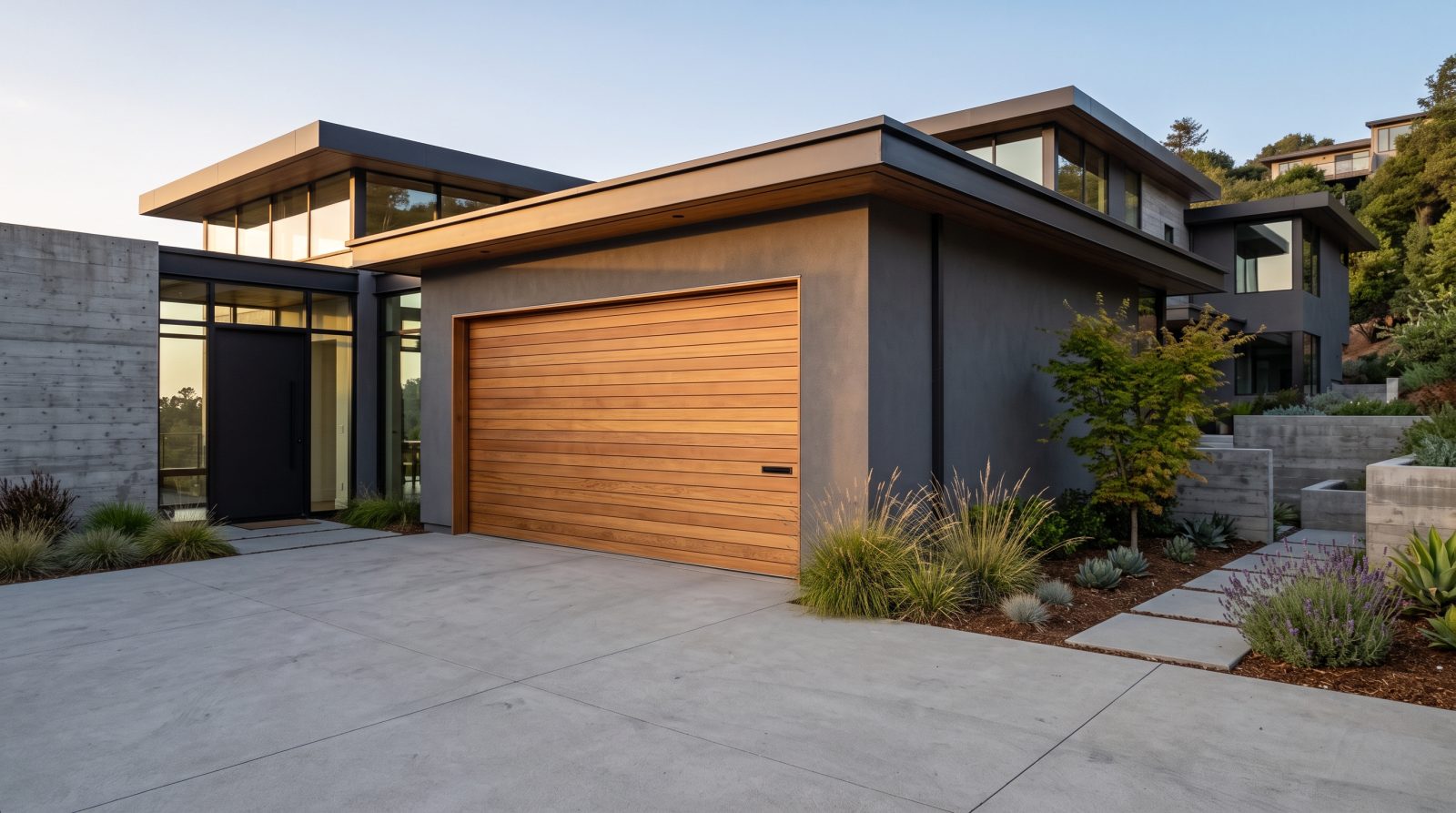
What Makes a Garage Door "Modern"
Modern garage doors are defined less by a single look and more by a design language: clean horizontal lines, minimal or hidden hardware, large uninterrupted surfaces, and a deliberate use of glass and metal. Where a traditional door breaks the face into many small raised panels with decorative stamping, a modern door reads as one or two large planes, sometimes scored with shallow, evenly spaced grooves. The goal is calm geometry rather than ornament.
There are a few recognizable families within the modern category. Flush (or smooth-panel) doors present a single seamless surface with no relief, ideal for minimalist and contemporary facades. Full-view glass-and-aluminum doors use a slim metal frame holding large glazed panels for a gallery-like, industrial-modern feel. Contemporary grooved or 'ribbed' doors add subtle horizontal scoring for texture and shadow lines without busyness. And modern wood-look doors deliver warm grain (real wood or convincingly textured composite/steel) in a frameless, linear layout that suits mid-century and warm-modern homes.
What matters in the Bay Area is matching the door's design vocabulary to the architecture you already have. A full-view aluminum door looks stunning on a glassy contemporary build but can fight a Craftsman bungalow. We help you read your facade honestly so the door elevates the house instead of looking like an afterthought.
- Flush / smooth-panel: one seamless plane, the purest minimalist look
- Full-view glass: slim aluminum frame plus large glazed sections, gallery-modern
- Grooved / ribbed: shallow horizontal scoring for shadow and texture
- Modern wood-look: linear grain in real wood or textured composite/steel
- Common thread: horizontal lines, minimal hardware, large uninterrupted surfaces
Materials: How Each One Performs in the Bay Area
Material choice is where aesthetics meet the realities of Bay Area weather, salt air, and microclimates. Each option behaves differently, and the right pick depends on your specific location and how the garage is used.
Aluminum and glass is the signature modern material. It is lightweight, naturally corrosion-resistant (a real advantage near the coast and bay), and frames can be powder-coated in almost any color. Glass options range from clear to frosted, tinted, and obscured for privacy. The trade-offs are insulation (glass insulates less than a solid foam-core panel) and cost, since full-view doors typically sit at the higher end of the range. For homes in foggy, marine-influenced areas, aluminum's resistance to rust makes it a durable long-term choice.
Steel is the workhorse of modern doors and offers strong value. Modern flush and grooved steel doors come with smooth or textured faces, take paint and factory finishes well, and insulated (sandwich-construction) versions add real energy and noise benefits. Near the immediate coastline, look for higher-grade galvanized and properly finished steel and keep up with rinsing and touch-ups, since salt accelerates corrosion at any scratch or chip.
Wood and wood-composite deliver warmth that pairs beautifully with mid-century and warm-modern homes. Real wood (cedar, mahogany, hemlock) is gorgeous but demands periodic refinishing, especially in sun-exposed inland heat or damp coastal air. Composite and steel-with-woodgrain options replicate the look with far less maintenance, which many Bay Area owners prefer given busy schedules and variable weather. Faux-wood finishes on steel or fiberglass resist the warping and checking that solid wood can suffer through wet-winter, dry-summer cycles.
- Aluminum + glass: corrosion-resistant, premium look, lower insulation, higher cost
- Steel: strong value, paints and finishes well, choose insulated and higher-grade near the coast
- Real wood: warmest look, needs regular refinishing in sun or marine air
- Composite / woodgrain steel: wood appearance with far less upkeep
- Microclimate matters: a coastal Pacifica home and an inland Walnut Creek home call for different specs
Finishes, Color & Glass Options
Finish is where a modern door goes from generic to designed. The dominant contemporary palette leans toward matte and satin neutrals: charcoal, anthracite, off-black, warm grays, bronze, and clean whites. Matte and low-sheen finishes hide minor surface variation and photograph beautifully, which is why they have largely replaced the high-gloss looks of decades past. Powder-coated aluminum and modern factory finishes on steel both hold color well and stand up to UV better than older painted finishes.
Color strategy should respond to your home. On a light or white facade, a deep charcoal or black door creates crisp contrast and a confident, modern statement. On a warm or wood-toned home, a bronze, espresso, or natural woodgrain finish keeps things cohesive. Two-tone approaches (a dark door with a contrasting trim or a wood door against a stucco wall) can add depth without clutter. We routinely help homeowners test finishes against their actual paint, stone, and landscaping rather than guessing from a brochure.
Glass turns a door into a feature. Clear glazing maximizes light and that open, gallery feel, but offers the least privacy. Frosted, satin-etched, and obscure glass let daylight into the garage while blocking views, a practical choice if you use the garage as a gym, studio, or workshop. Tinted and low-E glass help manage heat and glare in sun-drenched inland and South Bay lots. You can also mix solid and glazed sections, for example a row of glass only along the top, to get light and a modern line without a fully transparent door.
- Matte and satin neutrals (charcoal, anthracite, bronze, warm white) define the current look
- Dark door on a light home = crisp contrast; woodgrain/bronze suits warm facades
- Clear glass for max light; frosted/obscure for privacy on workshop or gym garages
- Tinted or low-E glass helps with heat and glare on sunny inland lots
- Mix solid and glazed panels for a modern line without full transparency
Insulation, Performance & Smart Hardware
Looks aside, a modern door should perform. Insulation matters more than many Bay Area homeowners expect, because attached garages share walls with living space and many homes now use the garage as a flex room, gym, office, or studio. Insulated doors use polyurethane or polystyrene cores rated by R-value: a higher R-value means better thermal resistance. For an attached garage, especially one that gets cold coastal fog or inland summer heat, an insulated steel sandwich door pays off in comfort and quieter operation. Even full-view glass doors can be specified with insulated glazing to soften the thermal penalty.
Noise is the underrated benefit. Insulated panels and quality nylon rollers dramatically cut the rumble of an opening door, which matters in dense Bay Area neighborhoods where the garage often sits directly below or beside a bedroom. Pairing a well-built door with a belt-drive or modern direct-drive opener keeps operation quiet.
Smart features are now mainstream and easy to integrate during installation. Wi-Fi-enabled openers let you open, close, and monitor the door from your phone, get alerts if it is left open, and grant temporary access for deliveries, which is genuinely useful given porch-package realities. Battery backup keeps the door working during outages (and is required for new residential openers in California), and modern safety sensors and auto-reverse protect kids, pets, and cars. We can advise on opener pairing and smart options as part of a modern-door installation.
- Insulated cores (polyurethane/polystyrene) add comfort to attached or flex-room garages
- Higher R-value = better thermal resistance for foggy coast or hot inland lots
- Insulated panels plus nylon rollers and a belt/direct-drive opener run noticeably quieter
- Wi-Fi openers: phone control, open-door alerts, and temporary delivery access
- Battery backup (required on new CA residential openers) keeps you running in outages
Choosing the Right Modern Door for Your Bay Area Home
The best modern door is the one that fits your architecture, microclimate, and how you actually use the space. Start with the facade: Eichlers and other true mid-century homes often look best with flush or warm woodgrain doors that respect their post-and-beam horizontality, while glassy contemporary builds can carry a full-view aluminum door beautifully. Classic San Francisco rowhouses and Edwardians often want a restrained modern flush or grooved door in a tasteful color rather than a heavily glazed statement.
Next, weigh your location. Coastal and bay-adjacent homes (think the Peninsula coast, parts of the East Bay shoreline, and foggy west-side San Francisco) benefit from corrosion-resistant aluminum or well-finished, insulated steel. Hot inland areas in the East Bay and South Bay should prioritize UV-stable finishes and consider tinted or low-E glass. Steep driveways and tight urban setbacks, common across the region, also affect track and clearance choices, which is exactly the kind of thing we check on-site.
Because we are a mobile service, we bring the showroom to you: we measure your opening, look at your home's colors and materials in real daylight, talk through how you use the garage, and recommend a door and finish that genuinely fits. As a rough planning guide, modern garage doors span a wide range depending on material, size, glass, and insulation, with full-view glass-and-aluminum doors typically at the higher end and flush or grooved steel doors offering strong value. These are typical industry estimates only and vary by door, material, and scope, so an accurate price always comes from measuring your specific opening. When you are ready, call for a free quote and we will come out, measure, and give you honest options.
- Match the style to the architecture: flush/wood for mid-century, full-view glass for contemporary builds
- Coastal homes favor aluminum or insulated, well-finished steel; inland favors UV-stable finishes and tinted glass
- Steep driveways and tight urban garages affect track and clearance, best checked on-site
- Full-view glass sits at the higher end; flush/grooved steel offers strong value (typical estimates, scope-dependent)
- Mobile service: we measure and advise at your home, then give a free quote