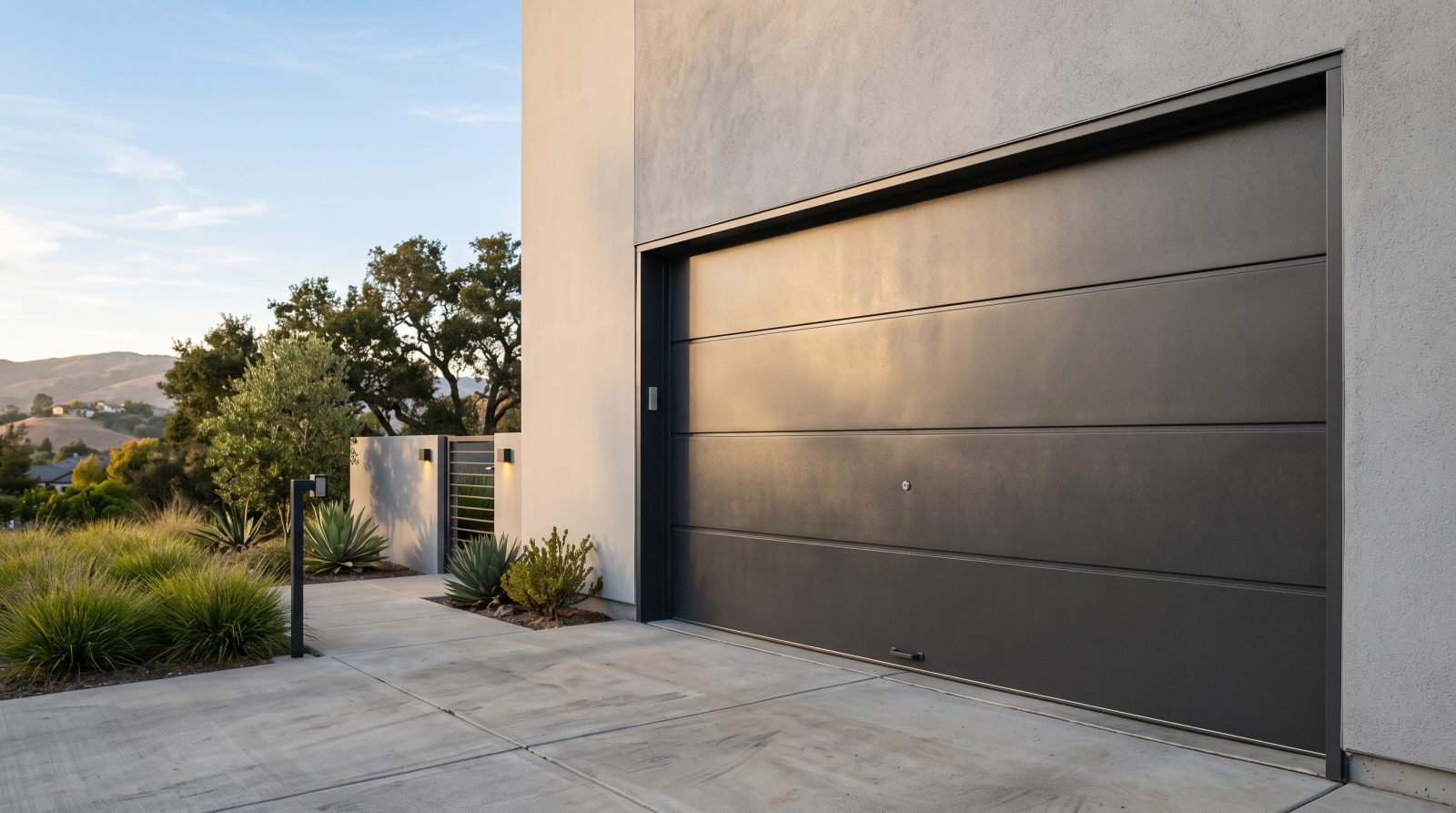
Why Steel Is the Default Choice for Bay Area Garages
Steel earned its place as the most popular garage door material because it solves the three problems homeowners care about most at the same time: it resists dents and break-ins better than aluminum, it doesn't warp, crack, or need refinishing like wood, and it can be engineered with insulation that genuinely changes how a garage feels. For a Bay Area home, where the garage is often a laundry room, gym, workshop, or de facto extra living space, that combination matters more than the showroom looks.
The Bay Area's micro-climates also make steel a practical pick. A door in Walnut Creek or Livermore bakes in summer afternoon sun, while a door in Pacifica or the Sunset District sits in damp, salt-laden marine air much of the year. Steel handles both extremes well when it's built and finished correctly, because the steel itself is dimensionally stable across temperature swings and the factory coatings are designed to shrug off moisture. Wood, by contrast, swells and contracts with our coastal humidity and demands ongoing maintenance most homeowners never get around to.
Steel is also the value leader. Because it's mass-produced in standard sizes, a quality steel door costs a fraction of a custom wood or full-glass door while still offering a wide range of colors, woodgrain-look finishes, and window options. That means you can put your budget where it counts in the Bay Area: insulation and a stronger gauge, rather than paying a premium just for the material.
- Strong and secure: resists dents, prying, and forced entry far better than single-layer aluminum
- Low maintenance: no repainting, sealing, or warping like natural wood
- Climate-stable: holds its shape through inland heat and coastal damp without swelling or cracking
- Best value: quality looks and insulation options at a lower price than wood or full-glass doors
- Versatile looks: smooth, ribbed, carriage-house, and convincing woodgrain finishes are all available in steel
Single, Double, and Triple-Layer: What Steel Door Construction Actually Means
The single biggest decision in a steel door isn't the color, it's the layer count, because that determines insulation, quietness, and durability all at once. Understanding this one concept will save you from overpaying for a door that underperforms.
A single-layer (non-insulated) door is just one skin of steel with no backing. It's the cheapest option and fine for a detached garage you never heat or use as living space, but it's loud, it dents more easily because there's nothing behind the steel, and it offers essentially no thermal or sound benefit. A double-layer door adds a layer of insulation, usually polystyrene foam board, bonded to the back of the steel. This is a meaningful upgrade in quietness and temperature control. A triple-layer door sandwiches the insulation between two steel skins, so the inside of the door is finished steel rather than exposed foam. Triple-layer doors are the strongest, quietest, and best-insulated, and the interior steel skin protects the foam from dings and from being torn up in a busy garage.
For most Bay Area homes, a double or triple-layer steel door is the sweet spot. If your garage shares a wall with a bedroom, sits beneath a living space, or doubles as a workout or hobby room, the triple-layer build is usually worth the upgrade for the noise reduction and rigidity alone. We'll look at your specific garage when we come out and tell you honestly where the extra layers pay off and where they don't.
- Single-layer: one steel skin, no insulation; lowest cost, loudest, dents most easily
- Double-layer: steel + foam insulation backing; quieter, warmer, more rigid
- Triple-layer: steel + insulation + interior steel skin; strongest, quietest, best-insulated and most damage-resistant
- Rule of thumb: attached garages and rooms-over-garage benefit most from double or triple-layer
Insulation and R-Value: What It Really Does for Your Garage
Insulation in a garage door is rated by R-value, which measures resistance to heat transfer. A higher R-value means the door slows the movement of heat more effectively, keeping the garage closer to a comfortable temperature and reducing how much your home's heating and cooling fight against an uninsulated cavity. Non-insulated doors sit near R-2 or below, while well-built insulated steel doors commonly land in the R-9 to R-18 range depending on layer count and foam type.
Here's the honest Bay Area framing: we don't have brutal winters, so insulation isn't about surviving the cold the way it would be in Tahoe. What it does for us is more practical. In the inland East Bay and South Bay, an insulated door keeps a west-facing garage from turning into an oven on summer afternoons, which matters a lot if you store anything heat-sensitive or spend time out there. Near the coast, insulation helps blunt the chill and damp of marine air. And across the entire region, if your garage is attached or has rooms above it, an insulated door reduces the temperature swings that your HVAC has to chase, which can quietly trim energy costs.
Just as important and often overlooked: insulation makes the door dramatically quieter and stiffer. The foam dampens vibration, so the door rumbles less when it opens and closes early in the morning or late at night, and the added rigidity helps the panels resist wind and daily wear. If noise is a concern because of where you sleep or work relative to the garage, insulation is one of the best upgrades you can make.
- R-value measures how well the door resists heat transfer; higher is better
- Insulated steel doors typically range roughly R-9 to R-18 depending on construction
- Bay Area benefit is mostly comfort, noise, and energy stability, not extreme-cold survival
- Insulation also makes the door noticeably quieter and stiffer against wind and wear
- Most valuable for attached garages, west-facing doors, and garages used as living space
Coastal Corrosion: Protecting Steel from Bay Area Salt Air
Steel's one real weakness is rust, and that's a genuine consideration if you live anywhere the marine layer reaches, from Pacifica, the Sunset, and the Marina out to Alameda, San Leandro, and the bayfront communities. Salt-laden air accelerates corrosion on any exposed or scratched metal, so the way a steel door is built and maintained near the water matters more than it does inland.
The good news is that modern steel garage doors are well-equipped for this. Quality doors use galvanized steel, meaning the steel is coated with a layer of zinc that sacrifices itself to protect the metal underneath, and then finished with a baked-on primer and topcoat. That multi-layer factory finish is what stands between salt air and the raw steel. The key is to keep that finish intact: deep scratches, dents that crack the coating, and bare cut edges are where coastal rust starts. A triple-layer door with an interior steel skin also helps, because there's less exposed raw metal overall.
If you're near the water, a few simple habits go a long way: rinse the door a few times a year to wash off salt buildup, touch up any scratches or chips promptly so bare steel never sits exposed, and keep an eye on the bottom edge and hardware where moisture collects. When we install or service a door in a coastal zone, we'll point out the spots most prone to corrosion and recommend a build and finish suited to your exposure. For homes that take the worst of the salt air, we can also talk through whether a corrosion-resistant build or an alternative material makes more sense for your situation.
- Salt air accelerates rust on exposed or scratched steel, especially in coastal and bayfront areas
- Galvanized (zinc-coated) steel with a baked-on primer and topcoat is the main defense
- Keep the factory finish intact: address scratches, chips, and dents before bare steel is exposed
- Rinse the door a few times a year to remove salt, and watch the bottom edge and hardware
- Triple-layer doors expose less raw metal and hold up better in high-salt environments
Steel Garage Door Cost: Typical Ranges and What Drives the Price
Pricing is the question everyone has, so here's a straight answer: the figures below are typical industry estimate ranges, not a quote, and your actual price depends on your door size, the exact build you choose, the condition of your existing opening and hardware, and current material costs. We'll always give you a real number after we see the door.
As a general guide, a basic single-layer steel door installed tends to fall in the lower hundreds to roughly the low four figures, an insulated double or triple-layer steel door commonly runs in the mid-hundreds to low-thousands range, and premium steel doors with heavier gauge, designer finishes, carriage-house styling, or window inserts can climb higher from there. Double-wide doors cost more than single-car doors simply because they're larger and heavier. These are ballpark ranges meant to set expectations, and they vary by region, manufacturer, and the specifics of your project.
Several factors move the number on a real Bay Area job. Steel gauge is one: a lower gauge number means thicker, stronger steel and a higher price, but also better dent resistance and longevity. Insulation and layer count add cost but pay back in comfort, quiet, and durability. Windows, decorative hardware, and woodgrain or custom paint finishes add up. And your existing setup matters: if your tracks, springs, rollers, or opener are worn out, replacing them as part of the job affects the total but ensures the new door runs smoothly and safely instead of straining tired hardware. When we come out, we'll break down exactly what's driving your estimate so there are no surprises.
- All figures are typical estimate ranges that vary by region, door, material, and scope, not a fixed quote
- Basic single-layer steel: lower end of the range; insulated multi-layer: mid-range; premium builds: higher
- Lower steel gauge number means thicker, stronger steel and higher cost
- Windows, decorative hardware, carriage-house styling, and custom finishes increase price
- Worn springs, rollers, tracks, or openers may need replacing for safe, smooth operation
Choosing and Installing the Right Steel Door for Your Home
Picking a steel door comes down to matching the build to how you actually use your garage and where you live in the Bay Area. Start with the layer count and insulation based on whether the garage is attached, sits under living space, or doubles as a room you spend time in. Factor in your micro-climate: inland heat pushes you toward insulation for comfort, coastal salt air pushes you toward a robust galvanized finish and a build with less exposed metal. Then choose the gauge for the durability you want and the finish and windows for the look that fits your home, from a clean modern smooth panel to a carriage-house or woodgrain style that suits older Bay Area architecture.
Installation quality is just as important as the door you choose. A steel door is a heavy, spring-loaded system, and it only performs and lasts the way it should when the tracks are aligned, the springs are sized correctly for the door's weight, the rollers and hardware are sound, and the opener can handle the load. A premium door installed on worn or mismatched components will be loud, will wear out faster, and can be unsafe. Because we're a mobile service, we bring the assessment and the work to you: we measure your opening, evaluate your existing hardware, and install everything on-site so the finished door opens smoothly, seals well, and is set up to last.
If your current steel door is dented, rusting at the edges, sagging, or just tired and loud, replacement is often more cost-effective than chasing repairs on an old, poorly insulated door, and a modern insulated steel door is a noticeable daily upgrade. Whether you're replacing a failing door, upgrading for insulation and quiet, or outfitting a new build, we'll help you choose the right steel door and install it correctly. Call for a free quote and we'll come to you anywhere in the Bay Area.
- Match layer count and insulation to how the garage is used and your climate zone
- Choose galvanized steel with a strong factory finish if you're near the coast or bay
- Correct spring sizing, track alignment, and sound hardware are essential for safety and longevity
- Mobile, we-come-to-you service: on-site measurement, assessment, and installation across the Bay Area
- Replacing an old, dented, or poorly insulated steel door is often a smart, cost-effective upgrade