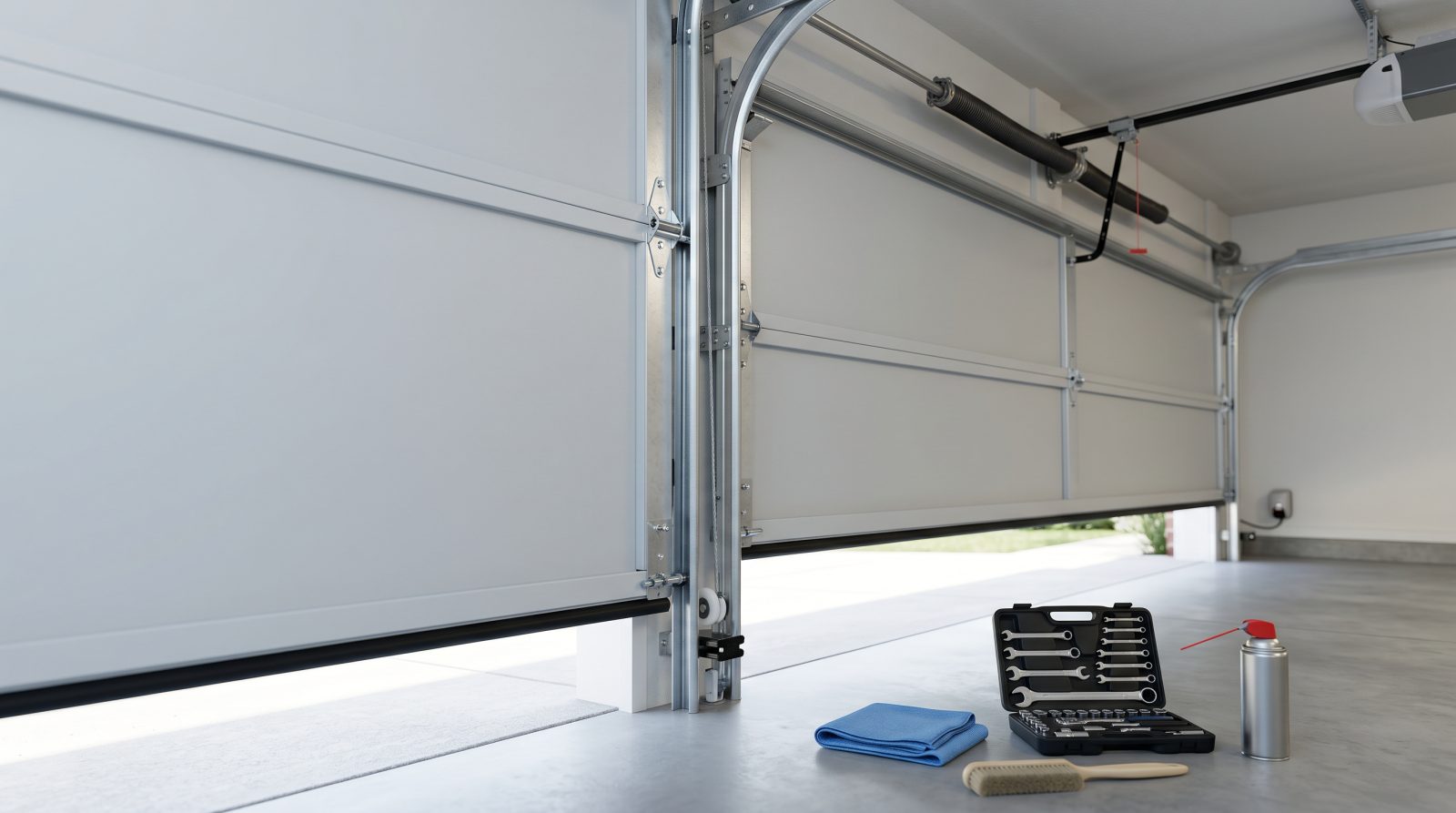
Why Bay Area Climate Is Hard on Garage Doors
The Bay Area is not one climate, it is many, and your garage door experiences whichever microclimate you happen to live in. A home in the Sunset District or along the Peninsula coast deals with persistent fog, marine humidity, and salt air that accelerates corrosion on steel springs, hinges, fasteners, and the curved cable drums at the top of the door. Inland communities in the East Bay and South Bay swing the other way, with dry, hot summer afternoons that evaporate lubricant, dry out weatherstripping, and cause metal components to expand and contract more sharply between day and night.
This matters because almost every part of a garage door is metal under tension or in constant motion. Springs and cables in particular live and die by corrosion and lubrication. A thin film of rust on a torsion spring creates micro-fractures that shorten its life by years, and salt air makes that happen faster near the water. Meanwhile, the wooden and composite doors common on many Bay Area Craftsman, Eichler, and mid-century homes are sensitive to moisture cycling, which can swell panels, loosen joints, and throw off the door's balance over time.
Understanding your specific microclimate tells you what to prioritize. Coastal and bayside homeowners should focus on corrosion control and frequent lubrication. Inland homeowners should watch for dried-out, cracking weatherseal and lubricant that has cooked away. Everyone in the region shares one concern that flat parts of the country do not: seismic readiness, which makes a securely mounted opener and a tested manual release more than just a convenience.
Spring Checklist: Reset After the Wet Season
Spring is the natural time to undo the damage of the wet season. After months of fog, rain, and damp garage floors, moisture is the enemy you are looking for. Walk the door from top to bottom in good light and look for the early signs of trouble before the dry season sets them in place.
Set aside about thirty minutes for this one. Most of it is looking and listening, with a little cleaning and lubrication at the end. Work with the door closed first for the visual inspection, then test the moving parts.
- Inspect for rust: Look closely at springs, cables, hinges, rollers, and all the bolts and brackets. Surface rust can often be wiped down and treated, but flaking, pitting, or rust on a spring or cable is a sign to call a professional rather than risk a failure.
- Check the weatherstripping: The rubber bottom seal and the side and top seals dry out and crack over winter. Press on them. If they are stiff, split, or no longer making contact with the floor, they let in water, drafts, and pests and should be replaced.
- Clean the tracks: Wipe out the vertical and horizontal tracks with a dry cloth to remove grit, leaves, and debris that washed or blew in. Do not lubricate the tracks themselves, since they are a guide rail, not a sliding surface.
- Wash the door surface: Mild soap and water on the exterior removes salt residue and grime, which is especially important for coastal homes where salt accelerates corrosion. Rinse and dry composite and wood doors thoroughly.
- Lubricate moving parts: Apply a garage-door-rated lubricant to the rollers, hinges, springs, and bearings. This is the single highest-value task on the list and undoes much of what the damp season took away.
Summer and Fall Checklist: Balance, Lubrication, and Heat
Bay Area summers run dry and, inland, genuinely hot. Heat is hard on lubricant and weatherseal, so summer is the season to re-lubricate and to test the things that depend on smooth, friction-free movement. Fall is your last chance to get the door dialed in before the wet season returns, making it the ideal time for the balance test that tells you the most about your door's health.
The balance test is the most informative thing a homeowner can do, and it requires no tools. A properly balanced door is held in position by its springs, not its opener. When the springs lose tension or wear out, the opener takes the strain, burns out early, and the door becomes dangerous to operate manually. Here is how to run the core checks during the dry months.
- Run the balance test: Pull the manual release cord to disconnect the opener, then lift the door by hand to about waist height and let go. A balanced door stays roughly in place. If it slams down or shoots up, the spring tension is off and a professional should adjust it, since spring work is genuinely dangerous to do yourself.
- Re-lubricate after the heat: Summer temperatures dry out lubricant faster, so reapply a proper garage-door lubricant to rollers, hinges, and bearings, especially for inland East Bay and South Bay homes.
- Test the auto-reverse safety features: Place a solid object like a roll of paper towels under the door and close it. The door must reverse on contact. Then wave a hand through the photo-eye sensor beam near the floor as it closes, and it should reverse without touching anything.
- Tighten the hardware: Door cycles and seasonal temperature swings loosen nuts and bolts over time. Snug up the roller brackets, hinges, and track mounting bolts with a socket wrench, but do not overtighten.
- Inspect the rollers: Worn, cracked, or wobbly rollers make the door noisy and rough. Spin each one by hand. If they do not turn freely or look chipped, they are due for replacement.
Winter Checklist: Seal Out the Wet and Test Manual Operation
Winter in the Bay Area means rain, fog, and damp that lingers. The goal in the cold, wet months is to keep water out, keep the door sealing tight, and make sure you can operate it by hand if the power goes out during a storm. Power outages are common enough during winter wind and rain events that a working manual release is not optional.
Cold and damp can also reveal problems that hide in warmer weather. Metal contracts slightly, lubricant thickens, and any borderline component is more likely to act up. If your door is going to fail, a wet winter morning is when it tends to happen, so a quick check before the rains arrive pays off.
- Verify the seals one more time: Confirm the bottom seal makes full contact with the floor across its entire width and that side and top seals are intact. Gaps let in driving rain and the cold, damp air that promotes rust inside the garage.
- Test the manual release: Pull the release cord and confirm you can open and close the door smoothly by hand, then re-engage it. Knowing this works before a storm-driven outage is critical, especially if your garage is your only way in.
- Check the photo-eye sensors: Fog, condensation, and a misaligned bracket can disrupt the safety sensors. Wipe the lenses clean and confirm both indicator lights are steady.
- Listen during operation: Run the door a few times and listen for grinding, popping, scraping, or a labored opener. New noises in winter often point to lubrication that has thickened or a component starting to fail.
- Keep the floor area clear: Stored items, bikes, and bins shift over the holidays. Make sure nothing can block the door's path or the sensor beam.
Earthquake Readiness: A Bay Area Essential
Living in earthquake country adds a layer most maintenance guides ignore. A garage door and opener that are not properly secured can become a problem during or after a quake, and the garage is often where homeowners keep emergency supplies, a second vehicle, or the path they would use to evacuate. A few minutes of attention here is genuinely worth it.
Two things matter most. First, the opener unit itself should be firmly mounted to solid framing, not loosely hung, so it cannot swing free or drop. Second, every member of the household should know how to use the manual release, because an earthquake commonly knocks out power and you do not want to be learning how the release cord works in the dark during an aftershock.
Practice opening the door by hand at least once so the motion is familiar. If your garage door is the only exit from the structure or the only way to get a vehicle out, treat the manual release as a piece of emergency equipment and check it on the same schedule as your smoke detector batteries.
When to Stop and Call a Professional
DIY maintenance is about inspection, cleaning, lubrication, and simple safety tests. There is a hard line where the job becomes dangerous, and that line is anything involving the springs and cables. The torsion and extension springs on a garage door store an enormous amount of energy under tension. When they let go, or when a cable under load is mishandled, they can cause serious injury. This is the part of the door that sends people to the hospital, and it is not a place to learn on the job.
Call a professional rather than attempting a fix yourself if you notice any of the following warning signs. As a mobile, we-come-to-you service across the Bay Area, the advantage of bringing a technician to your driveway is that the same person can inspect the whole system, catch the problem you found plus the ones you did not, and handle the high-tension work safely.
If your seasonal checks turn up anything on this list, it is time to bring in help rather than push the door to keep working. Costs for repairs vary widely by the type of door, the parts involved, and the scope of work, and any assessment is best given after a technician sees the door in person. When in doubt, call for a free quote.
- A broken, separated, or visibly stretched spring, or a spring covered in heavy rust
- Frayed, loose, or broken cables, or a door that hangs crooked or sags on one side
- A door that fails the balance test by slamming shut or flying open
- A door that will not open or close, reverses unexpectedly, or moves in jerks and jolts
- Auto-reverse or photo-eye sensors that fail their safety test and cannot be fixed by cleaning and realigning
- Loud grinding, banging, or popping noises that persist after lubrication
- Bent, separated, or misaligned tracks