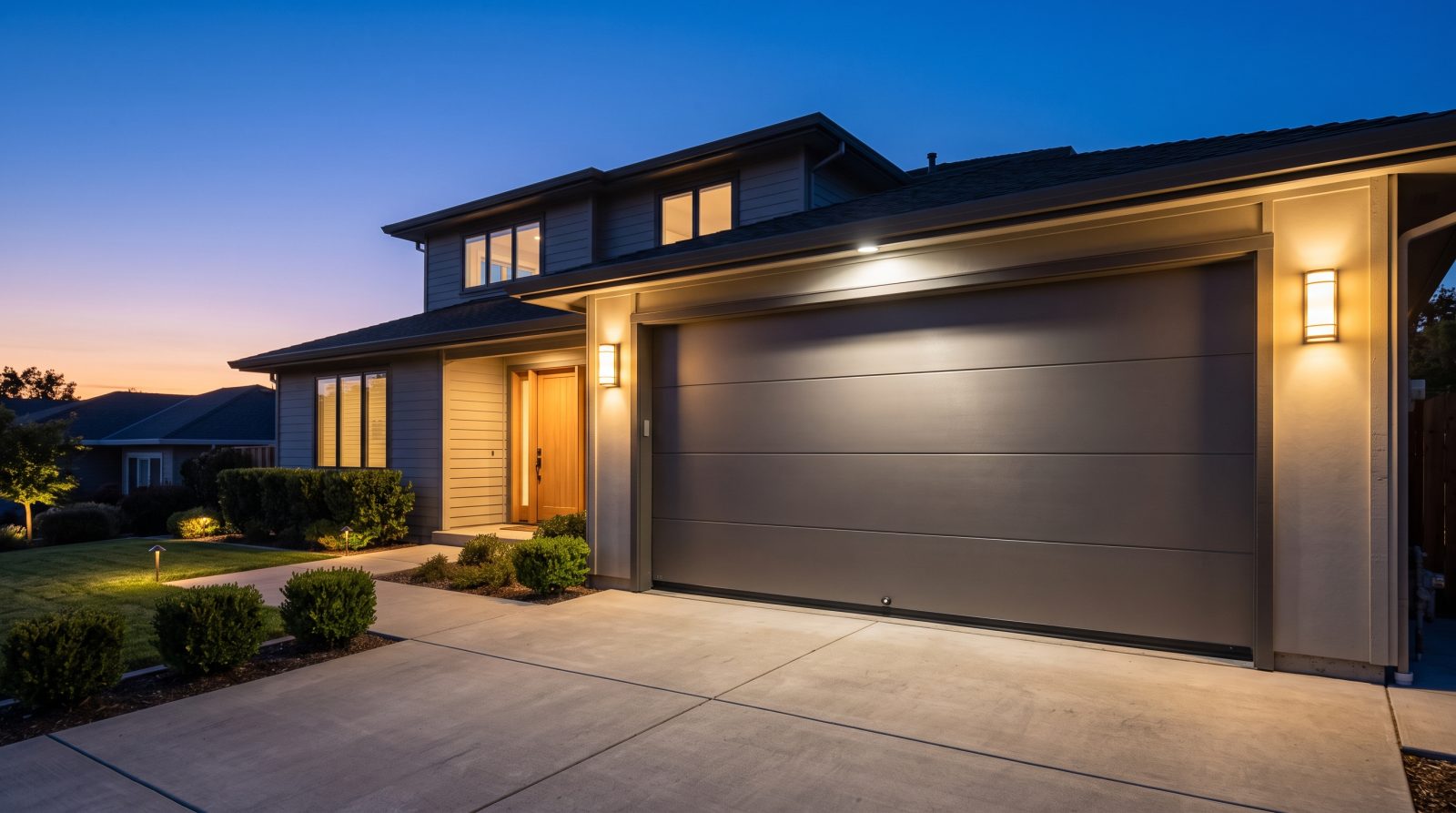
How Garages Actually Get Broken Into
Before you spend money on hardware, it helps to understand the handful of methods that account for most garage break-ins. The single most exploited weakness is the emergency release cord, the red handle that lets you disconnect the opener and lift the door by hand during a power outage. On many doors, an intruder can slip a thin tool through the top weather seal, hook that release lever, and disengage the opener in seconds. From there the door rolls up by hand. This is not an exotic technique; it is widely known, and it works on a surprising number of installs.
The second common path is the opener signal itself. Older fixed-code remotes can be captured and replayed, and even some rolling-code systems have known vulnerabilities. More often, though, the attacker does not need to defeat the radio at all. They get the remote the easy way: from a car. A garage remote clipped to a visor in an unlocked vehicle parked in the driveway is an open invitation, and it is doubly dangerous because the car registration usually has the home address on it.
The third path is structural. A bent or worn bottom section, loose or missing fasteners on the door panels, a side-hinged or older swing door with weak hardware, or a man-door (the regular walk-through door in the garage wall) with a builder-grade lock can all be forced. And finally, there is the interior door, the one between the garage and the living space. Once someone is in the garage, they are out of sight of the street and can take their time on that interior door if it is not properly locked. Most of the rest of this guide maps directly onto closing these specific gaps.
Secure the Emergency Release and the Opener
Because the emergency release is the most exploited weak point, start there. The fix is inexpensive and does not disable the function for legitimate use. A release-lock shield or a zip-tie-style retainer on the release lever stops the fishing attack while still allowing you to pull the cord deliberately from inside. Some homeowners simply remove the long pull cord and keep the lever close to the rail so it cannot be hooked from above; just make sure you can still reach and operate it in a real outage. If your garage has windows in the door or in the wall, frost them, cover them, or use opaque film so nobody can see whether a car is home or scout the release mechanism.
On the opener side, modern technology has genuinely improved security, and replacing a very old unit is one of the higher-value upgrades available. Look for these features and habits:
Once the opener is sound, the discipline matters as much as the hardware. Never leave a remote in a parked car, especially one in the driveway or on the street. Use a keychain remote or a phone app instead of a visor clip. If you sell a car or a remote is lost, re-pair or reset the system. And if your opener has a vacation or lock mode that disables remote signals while you are away, learn how to use it before your next trip.
- Rolling-code (or modern encrypted) technology that changes the access code with every use, defeating simple capture-and-replay attacks
- A smartphone-connected opener that alerts you if the door is left open and lets you close it remotely, which also catches the classic forgot-to-close mistake
- An automatic timer-close feature that shuts the door after a set period
- A motion-activated light on or near the opener so anyone approaching at night is lit up
- A wall-button lockout or vacation mode for when you travel
Harden the Door, the Track, and the Walk-Through Door
A secure opener does no good if the door itself can be forced or lifted off its tracks. For added physical security, especially on detached garages or any door you rarely operate, a manual slide lock or a dedicated garage door lock that bolts the door into the track is a strong deterrent; engaged at night or while traveling, it physically prevents the door from being raised even if the opener is defeated. There are also automatic deadbolt openers that lock the door into the track every time it closes, combining convenience with a real mechanical lock.
Walk the door and inspect the hardware. Tighten loose panel bolts and hinge fasteners, replace anything rusted or stripped, and make sure the bottom section and seal sit flush so there is no gap to fish through at the top. Confirm the door cannot be pried up at the corners; a damaged or sagging panel is both a security and a safety problem and is worth having looked at. If you have an older swing-up or side-hinged garage door, its hardware is often the weakest in the assembly and may warrant upgraded locks or a more secure replacement.
Do not neglect the man-door, the regular pedestrian door into the garage. Builders frequently install a basic, non-deadbolt knob lock there, treating it as interior even though it opens to the outside or to a shared corridor. Upgrade it to a solid deadbolt, reinforce the strike plate with longer screws into the framing, and consider a door reinforcement plate. The same logic applies to any garage window: add a lock, security film, or a bar, and keep it covered.
Lock the Interior Door and Light the Perimeter
Treat the door between your garage and your home as an exterior door, because functionally it is one. If an intruder gets into the garage, that interior door is the last line before your living space, and it should be just as tough as your front door. Install a quality deadbolt, use a reinforced strike plate with three-inch screws that reach the stud, and get in the habit of locking it even when you are home. In attached homes and townhomes, this one habit dramatically reduces what a garage breach can turn into.
Lighting and visibility are force multipliers. Burglars prefer to work unseen, so motion-activated lights covering the driveway, the garage approach, and any side path take away their cover. Keep landscaping trimmed back from the garage so there are no hiding spots against the wall, and make sure the door area is visible from the street rather than screened by tall hedges or a parked RV. A visible camera or smart doorbell aimed at the garage adds both deterrence and a record; many Bay Area neighborhoods coordinate informally through neighborhood apps, and a clear clip is far more useful than a grainy one.
Finally, build a few simple routines. Confirm the door is fully down before you leave and before bed, since a door left open even a few inches is the most common, most preventable invitation. When traveling, use vacation or lock mode, pause any package deliveries that would pile up visibly, and ask a neighbor to keep an eye on the driveway. Layered habits like these cost nothing and close the gaps that hardware alone cannot.
Bay Area Realities: Detached, Attached, and Shared Garages
Security priorities shift with the kind of home you have, and the Bay Area has a wide spread. In older established neighborhoods, in parts of San Jose, Oakland, the inner Peninsula, and pockets of San Francisco, detached garages and standalone structures are common. These are often used for storage, a workshop, or a second vehicle and may be operated less frequently, which makes a manual track lock and good lighting especially worthwhile since you can lock the door down for long stretches without inconvenience. Detached garages also tend to be set back or screened, so visibility and motion lighting carry extra weight.
Newer suburban developments across the South Bay, Tri-Valley, and outer East Bay lean toward attached garages with a direct interior door into the home. Here the interior deadbolt, a smart opener with open-door alerts, and remote discipline matter most, because a garage breach is effectively a breach of the house. The temperate, dry Bay Area climate is gentle on most door hardware, but coastal and bayfront areas, think the foggier stretches of the Peninsula, the western neighborhoods, and waterfront communities, see more salt air and moisture that can corrode springs, fasteners, and lock mechanisms over time. Corroded hardware is weak hardware, so periodic inspection is part of security, not just maintenance.
Townhomes, condos, and live-work units, common in dense San Francisco and the urban East Bay, add the shared-structure factor. You may share a wall, a driveway apron, or a common garage with neighbors and have HOA rules about what you can modify. In these settings, focus on what is within your control: your own interior door, your opener and remote habits, covering your unit's windows, and coordinating with the association on shared lighting, cameras, and gate or door maintenance. Whatever your housing type, the underlying principles are the same; the right mix of measures just changes with the layout. If you want a second set of eyes, we can come to you anywhere in the Bay Area, assess your specific door and setup, and recommend the upgrades that will actually move the needle. Call for a free quote.